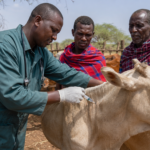



Zimbabwe could take an important step towards strengthening veterinary health security and reducing dependence on imported animal health products. The Government of Zimbabwe and the Belarusian company BelAgroGen are working on a proposed partnership to develop local production of veterinary vaccines and medicines, with a regional ambition for Southern Africa.
Zimbabwe is moving closer to a strategic project aimed at establishing local capacity for the production of veterinary vaccines and pharmaceutical products.
According to The Herald, the proposed partnership between the Government of Zimbabwe and the Belarusian veterinary biologics manufacturer BelAgroGen is valued at approximately USD 50 million. The draft Memorandum of Understanding is currently undergoing government approval procedures.
If finalised, the project could position Zimbabwe as a regional hub for veterinary vaccine and pharmaceutical manufacturing, serving both national needs and the broader Southern African Development Community (SADC) region.
A regional ambition for animal health
The project aims to strengthen Zimbabwe’s capacity to prevent and control livestock diseases while reducing reliance on imported veterinary vaccines and medicines.
A senior BelAgroGen representative said the objective is to make Zimbabwe a leading actor in protecting livestock across the region, by building a project capable of serving the whole of Southern Africa.
For Zimbabwe, this initiative fits into a wider agenda of veterinary health security, local industrialisation and faster response to transboundary animal diseases affecting livestock production.
A three-phase implementation plan
The investment is expected to be implemented gradually over a three-year period.
The first phase would involve the supply of BelAgroGen’s registered veterinary vaccines and pharmaceutical products to Zimbabwe. This would help improve the immediate availability of selected veterinary inputs in the country.
The second phase would focus on establishing local processing and repackaging facilities, allowing Zimbabwe to progressively build technical and industrial capacity in the veterinary pharmaceutical sector.
The final phase would involve the construction of a jointly owned facility for the local manufacture of veterinary vaccines and medicines.
Responding to transboundary animal diseases
Southern Africa remains exposed to several high-impact livestock diseases, including foot-and-mouth disease, African swine fever, poultry diseases and other transboundary animal health threats.
In this context, timely access to quality vaccines is a strategic issue for Veterinary Services, livestock producers and animal production value chains.
Local manufacturing capacity could help reduce supply disruptions, improve vaccine availability and support faster response during outbreaks.
Technology transfer and skills development
Beyond infrastructure, the proposed partnership also includes a strong focus on technology transfer and skills development.
According to reports, Zimbabwean students may benefit from scholarships to study in Belarus, while veterinarians, researchers and laboratory personnel would receive specialised training in vaccine development, biotechnology and veterinary medicine.
This component is essential. A sustainable veterinary pharmaceutical industry requires not only buildings and equipment, but also national expertise in production, quality control, regulation, research and field monitoring.
An opportunity with important safeguards
If successfully implemented, the project could strengthen Zimbabwe’s animal health system, support livestock productivity, improve food security and create opportunities for regional exports.
However, such a project will require strong safeguards, including compliance with international quality standards, effective regulatory oversight, transparent governance, reliable financing, biosafety and biosecurity measures, pharmacovigilance and post-market monitoring.
For African countries, local production of veterinary vaccines is a strategic priority. It can reduce external dependence, but it must be built on scientific rigour, quality assurance and alignment with the epidemiological realities of the region.
Towards a regional veterinary manufacturing hub?
The BelAgroGen-Zimbabwe project comes at a time when several African countries are seeking to strengthen local production capacity in both human and animal health sectors.
For livestock systems, the stakes are high. Transboundary animal diseases continue to affect rural incomes, animal-source food supply, trade and the transformation of food systems.
If implemented with technical rigour and strong regulatory oversight, the project could help position Zimbabwe as a regional centre for animal health innovation, vaccine production and veterinary pharmaceutical manufacturing.
At this stage, however, the agreement has not yet been finalised. The draft MoU remains under review by the Zimbabwean authorities, and the next steps will be critical in confirming the project timeline, financing arrangements, partner responsibilities and technical guarantees.