


Africa’s livestock sector holds enormous economic potential. But behind the figures are millions of farmers, pastoralists, women, young people, veterinarians and rural families who need better financing, stronger services and more organized markets to fully benefit from their animals.
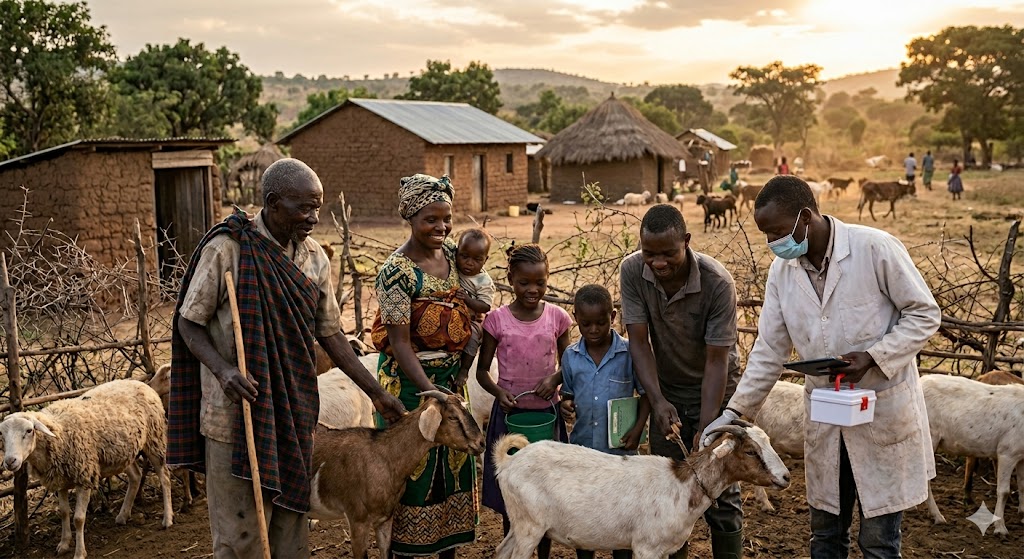
Across Africa, livestock is more than a business. For many families, cattle, sheep, goats, poultry and camels represent food, income, savings, dignity and resilience. Animals help pay school fees, support household nutrition, provide manure for crops and offer a safety net during droughts, disease outbreaks or economic shocks.
Yet, for many livestock keepers, turning this potential into stable income remains difficult. Access to credit is limited. Animal feed is expensive. Veterinary services are not always close enough. Vaccines may arrive late. Markets are often poorly organized. Cold chains, abattoirs, transport systems and processing facilities remain insufficient in many areas.
This is why the debate around Africa’s USD 90 billion livestock opportunity matters. It is not only about economic growth. It is about giving families the means to produce better, sell better and live better from their animals.
Financing must reach the people who keep the sector alive
The livestock sector cannot grow if financing remains far from the people who need it most. Smallholder farmers, pastoralist communities, women processors, young entrepreneurs, veterinary service providers, feed suppliers, traders and abattoir operators all require different types of support.
A farmer may need affordable credit to improve animal feed or buy better breeding stock. A veterinarian may need investment in mobility, cold chain equipment or diagnostic tools. A women’s cooperative may need equipment for milk processing. A young entrepreneur may need capital to enter poultry, feed production, animal health services or digital livestock solutions.
Investing in livestock is therefore not only about financing animals. It is about financing an entire ecosystem of people, services, infrastructure and markets.
The role of countries: creating the conditions for transformation
African countries have the first responsibility to make livestock a real engine of development. This means placing livestock higher in national investment plans, agricultural strategies and food security policies.
Governments need to strengthen veterinary services, improve disease surveillance, support vaccination, invest in laboratories, modernize livestock markets and promote safer animal-source food systems. They also need to create policies that make it easier for private investors, banks and cooperatives to support livestock value chains.
Countries also play a key role in improving data. Without reliable information on animal numbers, disease risks, market flows, prices, production systems and trade routes, it is difficult to attract serious investment.
For farmers, the impact of strong national action is very practical: healthier animals, better market access, fewer disease losses, safer food and more predictable income.
The role of regions: connecting markets and managing shared risks
Livestock does not stop at national borders. Animals move, pastoralists move, diseases move and markets are increasingly regional. This makes Regional Economic Communities essential.
Regions can help harmonize animal health standards, support cross-border disease surveillance, organize transhumance corridors, improve regional trade and reduce unnecessary barriers to livestock movement and animal product marketing.
Regional coordination is especially important for pastoral systems, where mobility is part of resilience. If countries work in isolation, livestock potential remains fragmented. But if regions coordinate investments, surveillance, infrastructure and trade rules, the sector becomes more attractive, more secure and more profitable.
The role of the African Union: giving livestock a continental voice
The African Union has a strategic role in positioning livestock as a continental development priority. Livestock is directly linked to food security, nutrition, employment, climate resilience, trade and rural transformation.
Through continental frameworks and high-level political engagement, the African Union can help ensure that livestock is not treated as a secondary agricultural activity, but as a major economic sector capable of supporting Africa’s transformation.
The AU can also help mobilize development partners, financial institutions, governments and the private sector around a shared vision: building productive, healthy, inclusive and climate-resilient livestock systems across the continent.
The role of AU-IBAR: technical leadership for animal resources
AU-IBAR has a central technical and coordination role in this transformation. As the African Union’s specialized technical office for animal resources, AU-IBAR supports countries and regions in improving animal health, livestock production, policy development, value chain transformation and market access.
AU-IBAR helps connect technical priorities with investment priorities. This includes strengthening veterinary services, supporting disease control, promoting data systems, improving livestock value chains and facilitating dialogue between governments, regional bodies, farmers’ organizations, development partners and private investors.
In the context of Africa’s livestock financing gap, AU-IBAR’s role is particularly important because it helps translate continental ambition into practical action: better policies, stronger partnerships, more credible data and investment-ready livestock programmes.
From potential to prosperity
Africa does not only need more animals. It needs better-financed, better-protected and better-organized livestock systems.
The continent already has the farmers. It has the animals. It has the markets. It has growing demand for meat, milk, eggs and other animal-source foods. What is still missing is the right level of structured, patient and inclusive investment.
Closing the livestock financing gap would mean more than unlocking billions of dollars. It would mean helping families protect their animals, helping young people find jobs, helping women grow businesses, helping veterinarians deliver better services and helping countries strengthen food security.
Behind the USD 90 billion opportunity is a simple human promise: allowing African families to live better from their work, their animals and their knowledge.