


Libreville, Gabon – 19 February 2025
At the official opening of the PPR Awareness Meeting in Libreville, Dr. Huyam Salih announced a bold new initiative to combat Peste des Petits Ruminants (PPR) and other transboundary animal diseases in Central Africa. She highlighted that AU-IBAR has established the Regional Animal Health Centre for Central Africa (RAHC-CA) to streamline animal disease risk management across the region.
Coordinated Regional Efforts
The newly formed RAHC-CA will serve as the central hub for coordinating strategies and operations aimed at eradicating PPR. Under the leadership of the regional coordinator, the centre will drive efforts not only to eliminate PPR but also to address other significant animal health threats that cross-national borders.
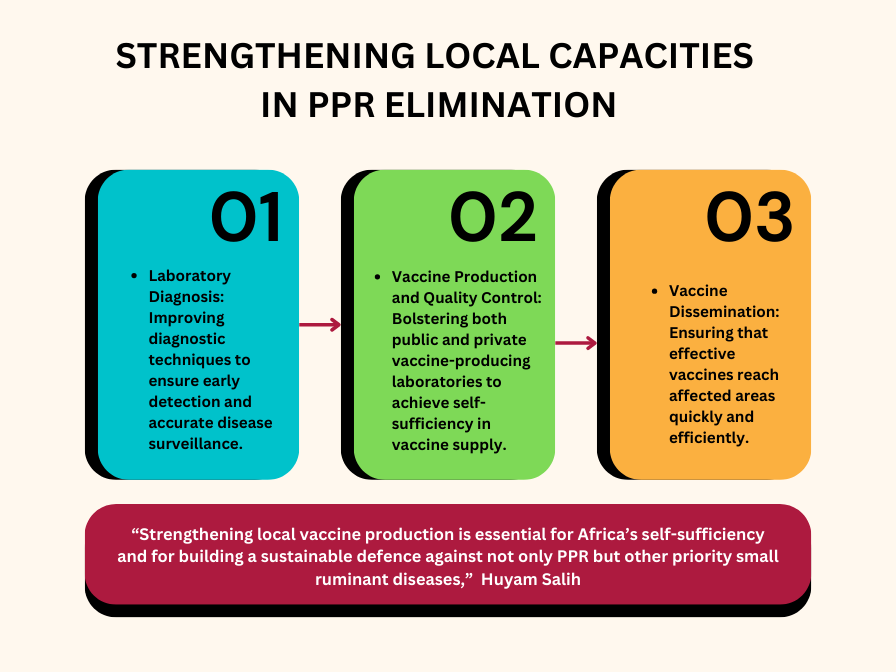
Strengthening Local Capacities
A central pillar of the initiative is the enhancement of the African Union’s capabilities in several critical areas:
• Laboratory Diagnosis: Improving diagnostic techniques to ensure early detection and accurate disease surveillance.
• Vaccine Production and Quality Control: Bolstering both public and private vaccine-producing laboratories to achieve self-sufficiency in vaccine supply.
• Vaccine Dissemination: Ensuring that effective vaccines reach affected areas quickly and efficiently.
Dr. Salih stressed the importance of maintaining momentum to achieve PPR eradication by 2030. “Strengthening local vaccine production is essential for Africa’s self-sufficiency and for building a sustainable defence against not only PPR but other priority small ruminant diseases,” she said.
A United Front
The event has brought together key stakeholders from across the region, including representatives from the Ministry of Agriculture and Livestock of the Republic of Gabon, CEBEVIRHA, FAO, WOAH, farmer organisations, and Chief Veterinary Officers (CVOs). This diverse coalition underscores the commitment to a coordinated, multi-sectoral approach to animal health through improved animal health management, enhanced regional cooperation, and a brighter future for the agricultural communities that depend on healthy livestock.
Source : AU-IBAR, 2025