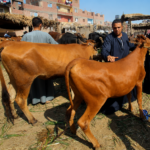



As animal health risks continue to threaten livestock production, Egypt is stepping up its national vaccination campaign against two major diseases: foot-and-mouth disease and Rift Valley fever. The campaign combines vaccination, animal identification, farmer awareness and veterinary surveillance.
In Egypt, veterinary teams are continuing their field work to protect the national livestock population. The Ministry of Agriculture and Land Reclamation announced that more than 5.84 million vaccine doses have already been administered as part of the national campaign against foot-and-mouth disease and Rift Valley fever, launched on 28 April 2026.
According to official figures, 3,135,575 animals have been vaccinated against foot-and-mouth disease, while 2,705,225 animals have received vaccines against Rift Valley fever. The campaign is being implemented across villages, districts and governorates, with the support of the General Authority for Veterinary Services.
Beyond the numbers, the campaign reflects Egypt’s efforts to strengthen disease prevention before outbreaks can further affect livestock production. For many livestock keepers, an animal disease outbreak can mean production losses, reduced income, movement restrictions and increased pressure on rural households.
Foot-and-mouth disease remains one of the most feared livestock diseases. It affects cattle, buffaloes, sheep, goats and other cloven-hoofed animals. The disease is highly contagious and can have serious economic consequences for animal production, trade and market stability.
Rift Valley fever is also a major concern for both animal and public health. It is a viral zoonotic disease that mainly affects animals but can also infect humans, particularly through contact with the blood or organs of infected animals or through bites from infected mosquitoes.
This is why Egypt’s campaign goes beyond vaccination alone. It also includes animal identification, registration and awareness activities for livestock keepers. Authorities are encouraging farmers to cooperate with veterinary teams, report suspected cases and allow vaccination and registration operations to proceed smoothly.
This approach is important for improving livestock traceability, monitoring vaccination coverage, strengthening surveillance and guiding future interventions. In rural and remote areas, regular access to veterinary services remains essential to reduce the risk of disease spread.
The campaign also highlights the direct link between animal health and food security. When livestock are better protected, farmers can maintain the production of milk, meat and other essential animal-source foods. Markets become more stable, economic losses are reduced and consumer confidence is strengthened.
In an African context marked by the circulation of transboundary animal diseases, mass vaccination campaigns remain a strategic tool. However, they must be supported by continuous surveillance, rapid diagnosis, proper vaccine storage, community engagement and regular dialogue with livestock keepers.
Egypt’s experience sends a clear message: protecting animals also means protecting livelihoods, markets, nutrition and the resilience of rural communities.