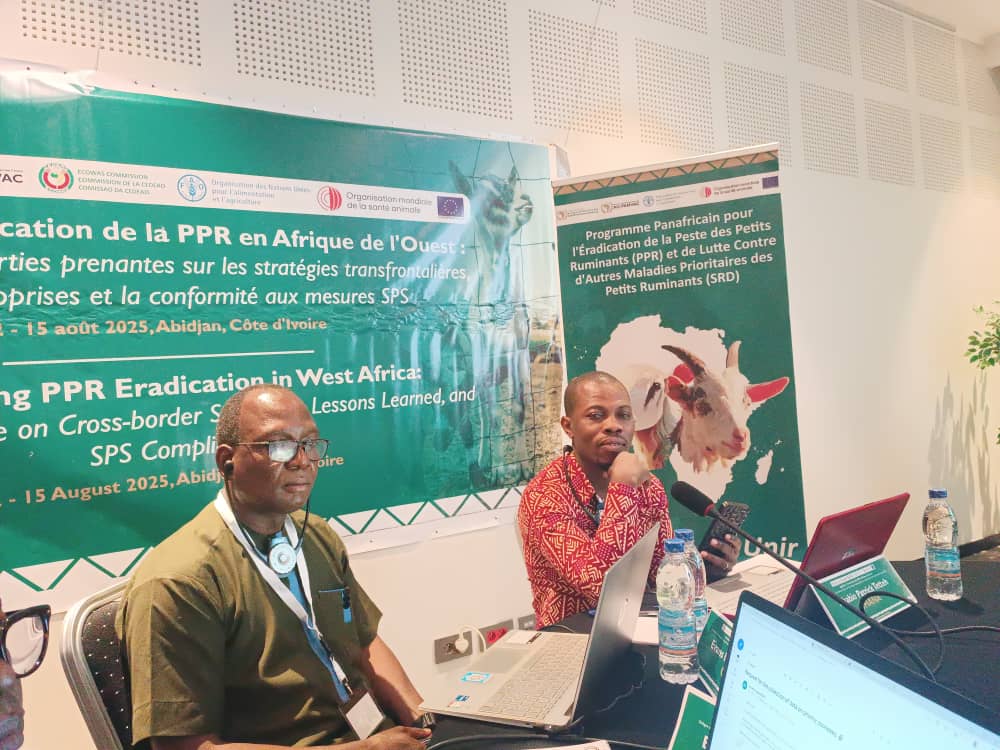



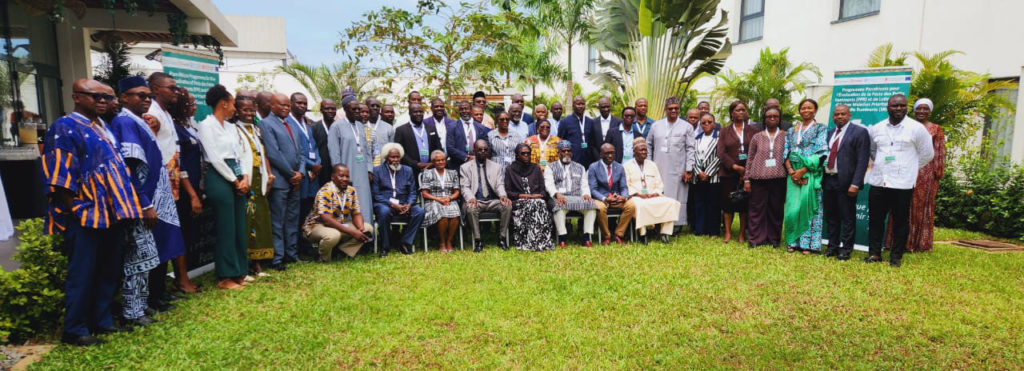
Abidjan, Côte d’Ivoire – 12 August 2025 – A major regional mobilisation is underway from 12 to 15 August 2025 in Côte d’Ivoire’s economic capital: the first regional stakeholder meeting dedicated to the eradication of Peste des Petits Ruminants (PPR) in West Africa.
This first regional stakeholder meeting, organised by the Directorate of Veterinary Services and Animal Welfare of the Ivorian Ministry of Animal and Fisheries Resources, in partnership with AU-IBAR, ECOWAS/RAHC, FAO and WOAH, with the financial support of the European Union, brings together policymakers, technical experts, financial partners and professional organisations to accelerate the eradication of PPR by 2030.
A sanitary, economic and social threat
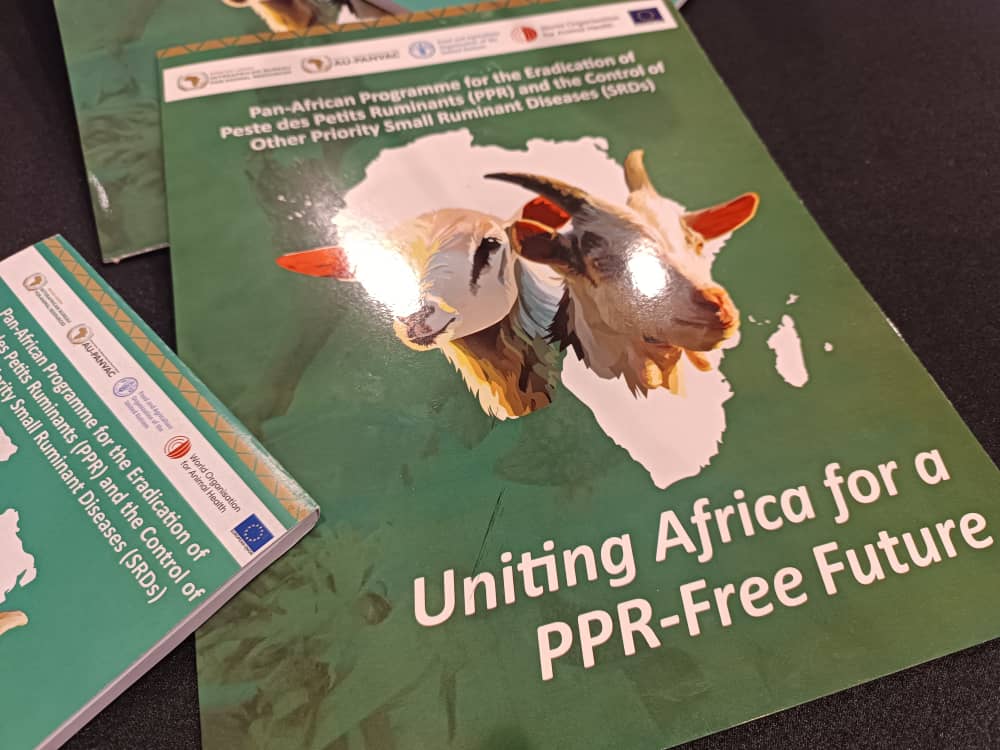
PPR is present in 47 African countries and threatens nearly one billion sheep and goats, vital for food security and rural livelihoods.
For Dr Hiver Boussini, representing the Director of AU-IBAR, this fight is “more than a veterinary challenge – it is a necessity for resilience, prosperity and regional integration.”
In many pastoral communities, small ruminants are the savings account, insurance policy, and daily income, particularly for women and young people. Their role in nutrition, climate adaptation and cross-border trade makes strict application of sanitary and phytosanitary (SPS) standards essential to boost regional and international market competitiveness.
Four days to act and decide
The Abidjan meeting aims to:
- Review progress and lessons learned in ECOWAS countries, in connection with PRAPS and national strategies.
- Update and validate operational tools tailored to cross-border realities: risk-based and synchronised vaccination protocols, surveillance guides, rapid response procedures, and harmonised reporting forms.
- Strengthen mastery of SPS standards to streamline trade and enhance competitiveness.
- Adopt a 2025–2030 work plan with measurable objectives, rigorous monitoring and sustainable financing.
Five key commitments in Abidjan
- Synchronise vaccination campaigns along priority corridors.
- Share data transparently through a regional dashboard.
- Ensure accountability through regular progress reviews and corrective actions.
- Strengthen capacities of veterinary services and laboratories.
- Coordinate financing to ensure continuity and efficiency of operations.
African leadership, international support
With a total programme budget estimated at USD 526 million, the initiative already benefits from EUR 8 million in initial funding from the European Union for its preparatory phase. However, organisers stress that “the direction, methodology and accountability are African” and call on Member States to invest in strengthening their own veterinary systems to guarantee sustainability.
A historic opportunity
For Dr Hassane Adakal (RAHC/ECOWAS), “urgent and collective mobilisation is needed to make West Africa a global model for PPR eradication.”
Representing the Ivorian Minister, Fadiga Haïda Kaly urged stakeholders to build on past successes, address identified gaps and “develop a coherent, collective and effective response” for the benefit of farmers and regional markets.
📌 AfricaVET will closely monitor the resolutions and commitments emerging from Abidjan, with the hope that this meeting will mark the turning point towards a continent free from PPR.