


The 25th Biennial Scientific Conference and 45th Sapphire Jubilee Anniversary of the African Association of Insect Scientists (AAIS) is being held from November 18–22, 2024, in Lusaka, Zambia. The event has brought together over 500 scientists from across Africa and beyond to explore critical issues under the theme “Climate Change: Impact on Insects and One Health.” This landmark gathering celebrates 45 years of AAIS’s contributions to sustainable food systems and insect science.
Representing AU-IBAR, Prof. James Wabacha delivered a keynote presentation on behalf of AU-IBAR’s Director, Dr. Huyam Salih. The presentation, titled “Continental Perspectives on Animal Diseases Transmitted by Insects in the Context of One Health and Climate Change,” examined the profound effects of climate change on vector-borne diseases (VBDs) across Africa. It underscored the expansion of habitats for vectors like mosquitoes, ticks, and tsetse flies, leading to the spread of diseases such as Rift Valley Fever, East Coast Fever, and Trypanosomiasis. For instance, the 1998–2002 Rift Valley Fever outbreak in Somalia caused over $400 million in economic losses, while Trypanosomiasis incurs annual losses of $133.9 million in Tanzania and $88.6 million in Kenya.
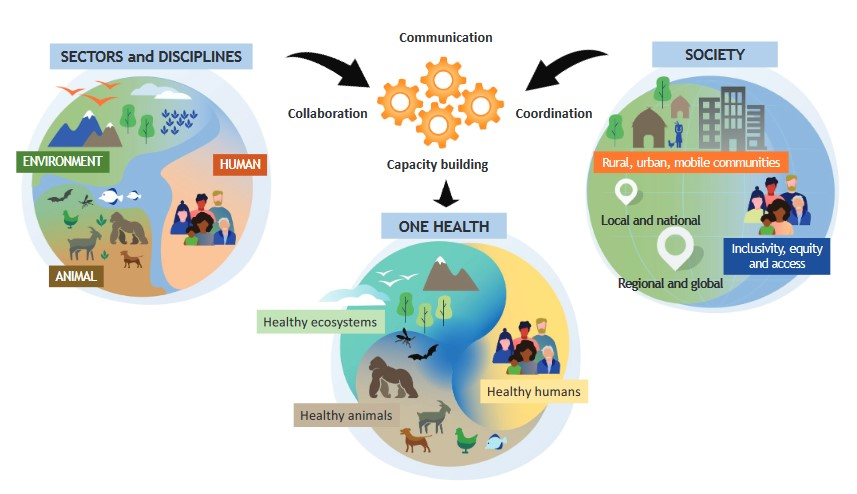
The conference was officially opened by Zambia’s Minister of Technology and Science, Hon. Felix C. Mutati. In his opening remarks, he highlighted the devastating impact of climate change on Zambia and the region, including extreme droughts and floods, and called for urgent research into the role of insects in ecosystems, agriculture, and public health. He emphasized the need for a One Health approach, which integrates human, animal, and environmental health, as a critical framework for addressing climate-sensitive challenges.
Dr. Abiola Olufunke Oke, President of AAIS, reflected on the association’s 45-year legacy and its foundation by the late Prof. Thomas Risley Odhiambo, posthumously honored as the “Father of AAIS.” She celebrated milestones such as the publication of AAIS’s first electronic book of proceedings and the launch of a history book chronicling its journey. These publications provide vital resources on the intersection of insects, food security, and climate change.
AU-IBAR’s presentation also introduced the Continental Digital One Health Platform (AU-DOHP), a decentralized data system based on data mesh architecture. Designed to integrate and harmonize datasets, the platform provides accurate and timely information to enhance decision-making across Africa. Core principles of the platform include decentralized data ownership, self-serve infrastructure, and federated governance. AU-IBAR further highlighted its ongoing initiatives, such as capacity-building programs, risk management systems, and biennial Tsetse and Trypanosomiasis (T&T) conferences, which foster collaboration and knowledge-sharing among stakeholders.
AAIS acknowledged AU-IBAR as a key partner and co-organizer of the conference, recognizing its significant contributions to addressing climate-sensitive VBDs. This collaboration underscores the importance of integrated strategies to safeguard animal and human health in Africa.
Key Takeaways
The conference reaffirmed the importance of the One Health approach, the critical role of tools like AU-DOHP, and the need for sustained collaboration among scientists, health professionals, and policymakers.
As it concluded, the event charted a path for Africa to address climate-sensitive health challenges, enhancing the health and livelihoods of its populations in an era of rapid environmental change.
Source : AU-IBAR, 2023