


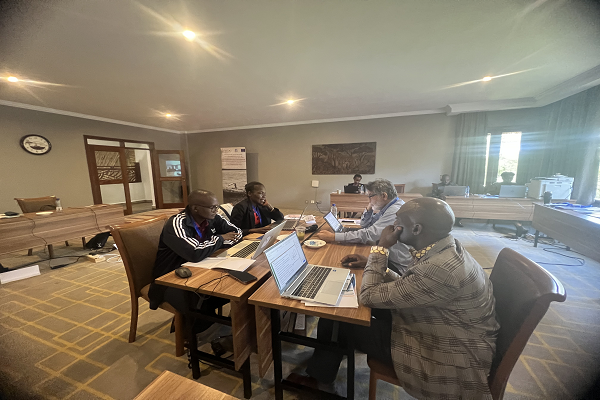
From April 16th to 18th, 2024, the 3rd Meeting of the Sustainable Aquaculture Development Working Group of the African Fisheries Reform Mechanism was held, bringing together AU-IBAR and AUDA-NEPAD. The objective was to generate knowledge products and discuss vital recommendations for African fisheries reform and sustainable development.
Mrs. Hellen Guebama, speaking on behalf of Dr. Huyam Salih, highlighted the restructuring of the initiative under the African Fisheries Reform Mechanism to enhance its effectiveness. The meeting aimed to promote sustainable aquaculture development and produce policy briefs and best practices through knowledge dissemination and capacity building involving African Union Centres of Excellence and key stakeholders.
Dr. Bernice Mclean, representing AUDA-NEPAD, emphasized the significance of aquaculture development on the continent in contributing to aquatic food and dialogue. The role of The Aquaculture Network for Africa (ANAF) and non-state actors, including the World Apiculture Society established through Aquaculture Africa (AFRAQ), was highlighted for sharing innovations and research with decision-makers. Collaboration and knowledge dissemination were emphasized for greater uptake.
The statement by Prof. Adel Abdel Aleem Mahdy Shaheen, Chair of the Sustainable Aquaculture Development Working Group, stressed the importance of making aquaculture sustainable and embracing technology and networking through ANAF. Sustainable aquaculture was viewed as crucial for nutrition, poverty alleviation, job creation, and the well-being of future generations.
The meeting was officially opened by Ms. Rebecca Muritu, Acting Director of Fisheries and Aquaculture Development, State Department for Blue Economy and Fisheries, Ministry of Mining, Blue Economy, and Maritime Affairs. Ms. Muritu recognized Africa’s fish resources’ potential for socio-economic growth and food security, praising Kenya’s progress in aquaculture. Challenges such as policy coordination were acknowledged, and the need for fisheries reforms was highlighted.
The three-day workshop covered various topics, including the production and publication of knowledge products, aquatic biosecurity control, and aquatic ecosystem health in Africa. Discussions delved into collaboration, knowledge dissemination, and coordinated action as essential elements for advancing sustainable aquaculture. Biosecurity, seed quality, feed optimization, investment finance, extension services, value addition, and balanced regulations were identified as key considerations for fostering a conducive environment for aquaculture growth while ensuring environmental sustainability and socio-economic development.
The meeting concluded with workgroup discussions on synthesizing the identified issues into knowledge products and outlining the next steps. The adoption of a communique solidified the actionable recommendations generated during the meeting.
The participants of the Sustainable Aquaculture Development Working Group included representatives from the Ministry of Fisheries and Blue Economy of the Republic of Kenya, AUDA-NEPAD, African Union Member States’ Directors of Fisheries and Aquaculture, Regional Economic Communities (ECOWAS), Development Partners (FAO and AFDB), Regional Fisheries Bodies and Regional Fisheries Management Organizations (LVFO), African Union Centres of Excellence in Fisheries and Aquaculture (AU-COEs) CLAR, Non-State Actors in Fisheries and Aquaculture in Africa (NSAs) (ANAF), and AU-IBAR staff.