


Wastewater testing has become a hallmark of viral surveillance during the COVID-19 pandemic, and a new study looking at samples collected near homeless encampments reveals novel viral mutations and transmission patterns and 26% of water samples containing SARS-CoV-2 genetic material. The study was published today in Environmental Science & Technology Letters.
Traditional wastewater monitoring relies on testing samples from local sewage infrastructure, which serves homes and apartment buildings. SARS-CoV-2–infected people shed maximum viral RNA levels in fecal matter at the beginning of infection and for up to 7 months following the initial infection. Previous studies have shown wastewater samples have predicted when COVID-19 activity has spiked in a location, and identified variants of concerns.
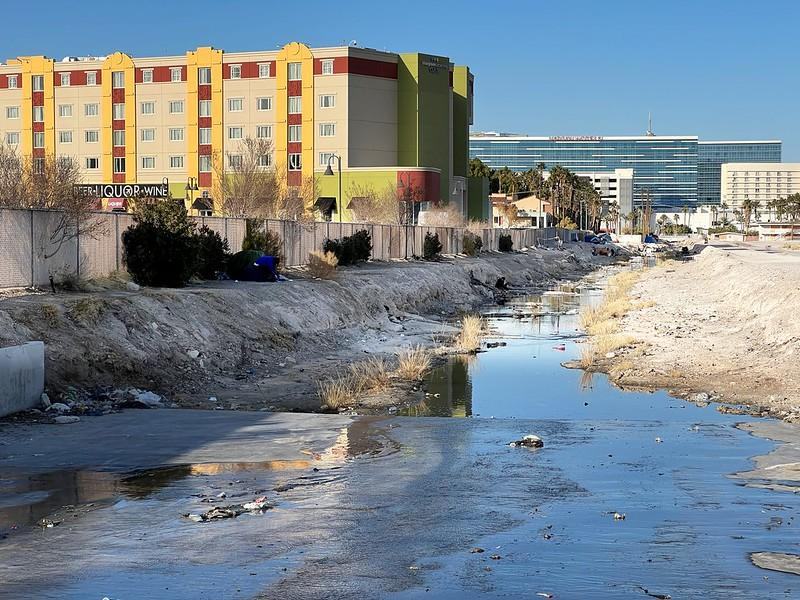
To capture those changes among homeless people, researchers needed to sample waterways near encampments, and not traditional sewage lines. In the present study, water near encampments outside Las Vegas was sampled from December 2021 through July 2022.
Scientists collected the water from flood-control infrastructure that is known to be affected by homeless populations, the authors said.
26% of samples contained SARS-CoV-2 RNA
They found that, of 57 samples obtained, 15 (26.3%) contained detectable levels of SARS-CoV-2 RNA, with highest concentrations in January and February 2022, which corresponded to peak Omicron activity in Las Vegas.
“These results demonstrate that environmental water samples from flood control channels impacted by unsheltered individuals appear to contain the same SARS-CoV-2 variants circulating in the broader community … with some intermittent signals from previously circulating variants,” the authors wrote.
These results demonstrate that environmental water samples from flood control channels impacted by unsheltered individuals appear to contain the same SARS-CoV-2 variants circulating in the broader community.
In subsequent whole-genome sequencing, the authors identified the SARS-CoV-2 variants in the waterways. Almost all variants matched what was seen in traditional sewage infrastructure. “However, we also detected 10 of 22 mutations specific to the Alpha variant in the environmental water samples collected during January 2022—one year after the Alpha infection peak,” they noted.
Analysis of viral sequences uncovered three novel viral spike protein mutations, but the authors said there was not enough information to determine if the mutations changed clinical outcomes for COVID-19 patients in the encampments.
“Due to a lack of clinical surveillance data for unsheltered individuals, we were unable to directly compare variant prevalence for the environmental water samples with this particular population,” the authors said.
Source : CIDRAP, 2024