


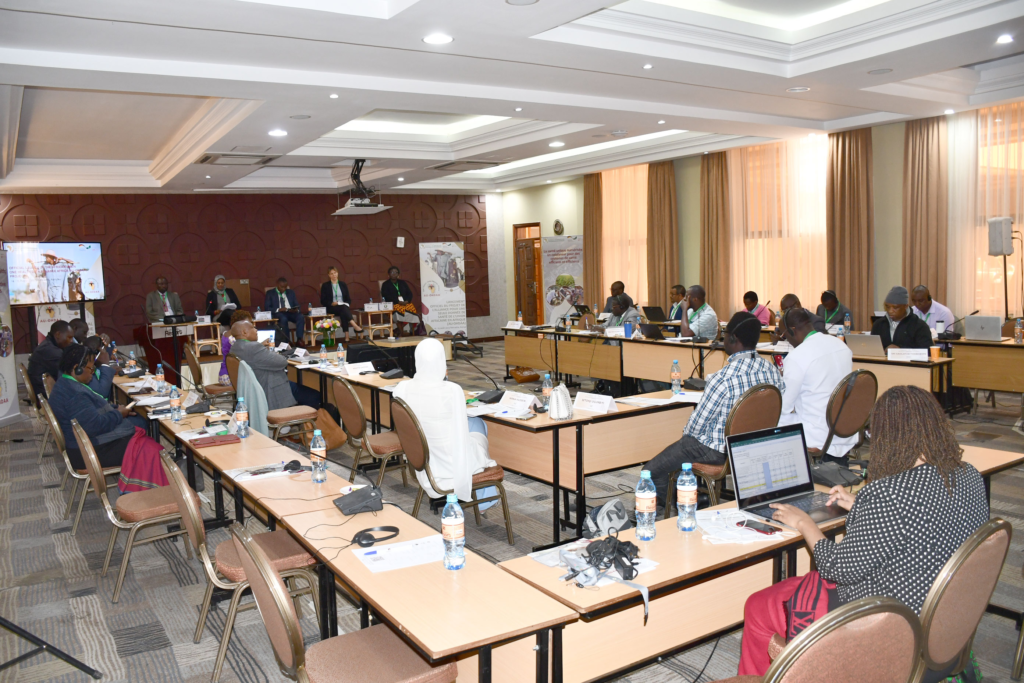
The African Union is stepping up its efforts to promote a holistic and integrated approach to health with the launch of the African Union One Health Data Alliance Africa Project (AU-OHDAA). To initiate this transformative journey, AU-IBAR has gathered experts from across the continent for a two-day launch workshop this week from August 14th to 15th in Naivasha, Kenya.
The workshop’s focus is to present project objectives, establish stakeholder roles, foster collaboration, and review the technical reports that underpin the project. With an emphasis on collaboration, integration, and shared knowledge, the AU-OHDAA project sets the stage for a more interconnected and resilient approach to health and ecosystem management across Africa. This comprehensive project seeks to optimize the health of humans, animals, and ecosystems by recognizing their interconnectedness and interdependence.
During the official opening of the meeting, Dr. Christopher Wanga, representing the Permanent Secretary, Ministry of Agri & Livestock Development in Kenya, highlighted how the One Health Data Project’s outputs will be a game-changer as it will break down data barriers for effective disease management across sectors, “Let’s collaborate across sectors and unite against data silos.”
Dr. Godfrey Bahiigwa, the African Union Representative, underscored the need for a global, all-encompassing One Health approach. “This framework is crucial in reshaping policies, overcoming data harmonization challenges, and enabling evidence-based decision-making processes,” he noted.
Promoting Unity in Health
The One Health approach, which unifies human health, animal health, and the environment, aims to balance the well-being of various living organisms and ecosystems. It emphasizes the interconnectedness of people, animals, plants, and the broader environment, highlighting the need for collaborative efforts to ensure clean water, energy, air, safe food, and sustainable development.
Recognizing the increasing incidence of zoonotic diseases and the significance of shared health ecosystems, the AU-OHDAA project aims to coordinate all One Health domains to work in synergy for the greater good.
One Health Data Management Challenges
While the One Health approach has gained momentum, the effective management and integration of health-related data remain a challenge. Most of the data related to zoonotic diseases, epidemics, foodborne illnesses, and antimicrobial resistance have remained fragmented across sectors. This has led to a lack of comprehensive insights, slowing the pace of advancements in data science and digital intelligence.
The lack of integration and harmonization of data platforms, particularly in the One Health sphere, has resulted in information loss and poor governance and management. The AU-OHDAA project recognizes the need for a broader view of One Health that encompasses animal health, human health, and environmental health domains.
Three Pillars of Progress
Through the AU-OHDAA project, three key outputs are anticipated:
- One Health Information Architecture and Policy: Developing a policy and architecture to guide the exchange and utilization of One Health information.
- Technological and Institutional Prerequisites: Establishing the technical and institutional groundwork for digitalized One Health governance and management.
- Specialist Qualification: Creating competency profiles and qualification materials for specialists involved in building, operating, and maintaining One Health information platforms.
In partnership with various African Union institutions and stakeholders, AU-OHDAA aims to craft a One Health information policy and associated architecture for seamless information exchange. This policy, once endorsed by the Africa Union, will provide guidance to institutions across Africa in designing, developing, and maintaining One Health information platforms. The project’s ultimate goal is to promote information integration, digital intelligence, and effective One Health governance and management.
Source : AU-IBAR, 2023