


On the occasion of International Donkey Day, celebrated on 8 May 2026, Dr Hiver BOUSSINI, Senior Expert in Animal Health and Welfare, Livestock and One Health, delivered a strong message calling for greater recognition, protection and welfare of donkeys in Africa.
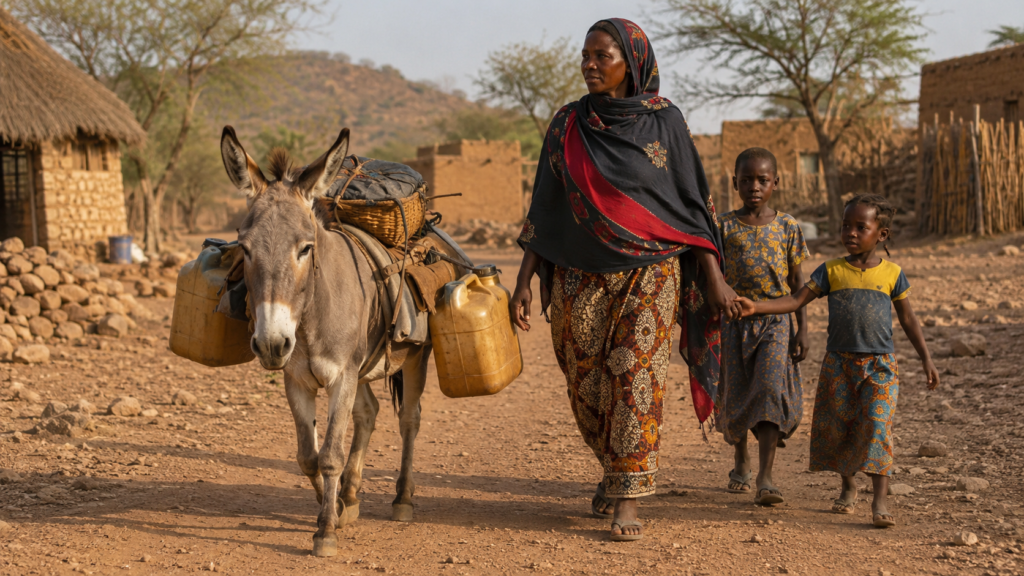
Often overlooked in livestock and rural development policies, the donkey remains essential to the daily lives of millions of families. In villages, markets, along pastoral routes and in remote areas, donkeys transport water, firewood, crops, agricultural inputs, goods and sometimes people.
For many rural communities, the donkey is far more than a working animal. It is an economic, social and family support system. It helps women, elderly people, smallholder farmers, transhumant herders and vulnerable households cope with daily challenges.
In his message published in Ouagadougou, Dr Hiver BOUSSINI reminds us that the donkey should no longer be considered a second-class animal, but rather a true driver of resilience.
A strong message to pay tribute to the donkey
On this occasion, Dr Hiver BOUSSINI shared the following message:
“On this 8 May, we celebrate International Donkey Day, honouring a silent worker that is essential to the lives of millions of families in Africa and around the world.
The donkey is not a second-class animal. It is a driver of resilience.
Every day, in our villages, in our markets and along pastoral routes, the donkey carries water, firewood, crops, inputs and people. It supports women, elderly people and the most vulnerable. It is the ‘taxi’ of remote areas, the ‘tractor’ of smallholder farmers and the ‘companion’ of transhumant herders.
In Africa and across the Sahel, several million donkeys — more than 40 million in the 24 out of 55 African countries that provided data — contribute directly to food security, income generation and reducing the burden of hard labour. Without donkeys, thousands of children would not go to school because water would have to be fetched from too far away.
Yet the donkey suffers in silence. It is a victim of overloading, poor harnessing, lack of care, illegal slaughter for the ‘ejiao’ donkey skin trade, and a severe lack of recognition.
The African Animal Welfare Strategy and WOAH standards remind us that donkey welfare is a collective responsibility.
Protecting the donkey means protecting the livelihoods of the poorest. It means defending decent work. It means applying the concept of ‘One Welfare’.
Today, let us pay tribute to the donkey. Tomorrow, let us act for its welfare.”
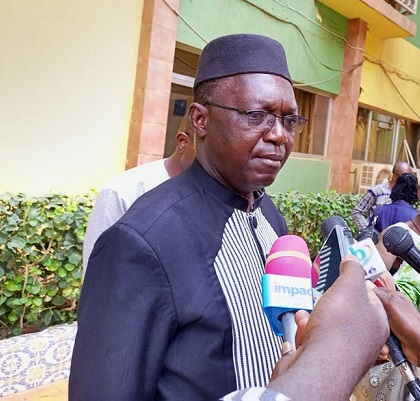
Senior Expert – Animal Health & Welfare, Livestock, One Health
Former Head of the Animal Welfare Team at the African Union
An indispensable animal, yet still too vulnerable
Despite its vital role, the donkey remains exposed to many forms of suffering. In several regions, it is subjected to excessive loads, inappropriate harnessing, lack of water, lack of rest and limited access to veterinary care.
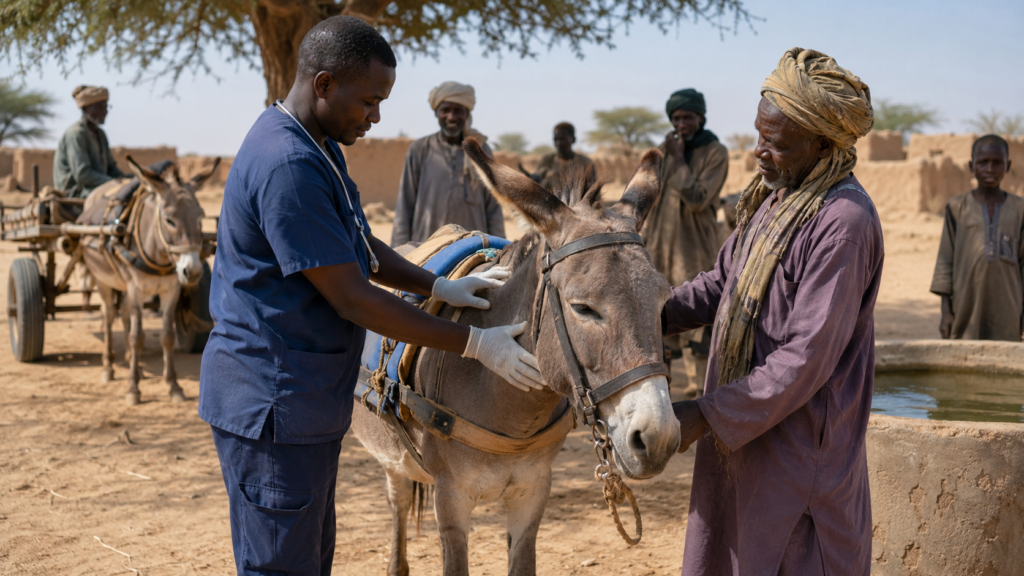
These challenges are compounded by theft, mistreatment and illegal slaughter, particularly linked to the donkey skin trade. This phenomenon weakens animal populations, but also the rural families who directly depend on these animals for their daily activities.
For Dr Hiver BOUSSINI, protecting the donkey must therefore be seen as an issue of rural justice, animal health and sustainable development.
A call to owners, decision-makers and partners
In his message, Dr Hiver BOUSSINI calls on donkey owners and users to respect their load capacity, provide them with water, rest and veterinary care. A healthy donkey works better, longer and under better conditions.
He also invites public decision-makers to integrate donkeys into livestock policies, national statistics and rural development plans. He further advocates for the effective implementation of the African Union’s ban on the illegal donkey skin trade.
To communities, he calls for protecting donkeys from theft and mistreatment, while raising children’s awareness about respect for animals. To technical and financial partners, he calls for support for research on donkey health, the production of appropriate harnesses, and the training of farriers and animal health auxiliaries.
Protecting donkeys means protecting rural families
International Donkey Day reminds us of a simple reality: behind every well-treated donkey, there is often a better-supported family, a less exhausted woman, a child who can go to school, a producer who can transport his or her harvest, and a community that becomes more resilient.
By highlighting the concept of One Welfare, Dr Hiver BOUSSINI underlines the deep link between animal welfare, human well-being and the sustainability of rural communities.
Through this call, AfricaVET relays an essential message: recognising the donkey means recognising the silent work of millions of animals that contribute every day to food security, rural mobility and the dignity of African families.
Happy International Donkey Day